

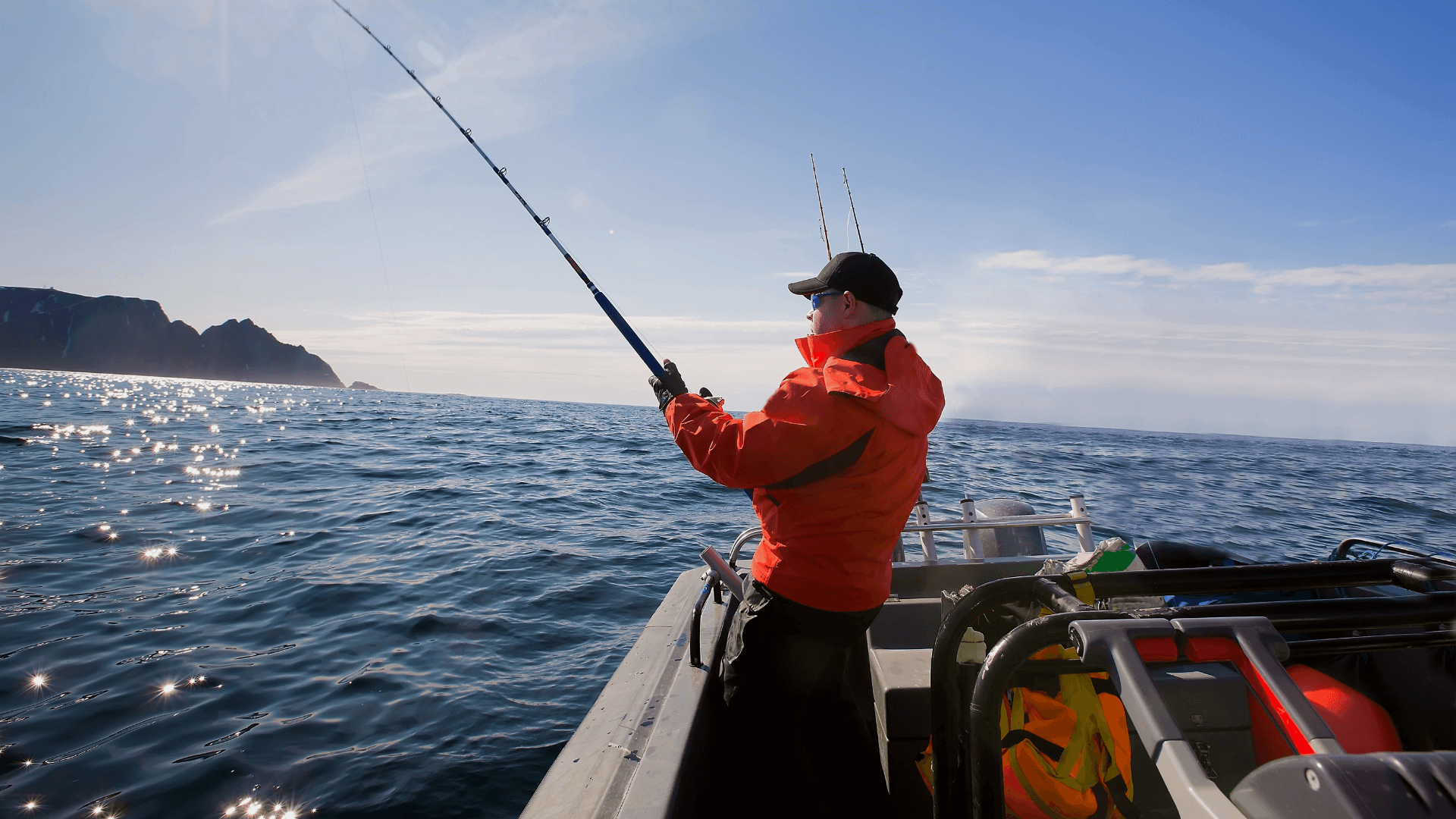
Tenya fishing has become a very popular technique among sea fishing enthusiasts, especially for those targeting carnivorous fish such as bass and sea bream, but also many other species, more or less popular.
With the rise of this method and the many types of reels available on the market, it can therefore be difficult to know which model, which large family best suits your needs.
To help you make the right choice of equipment, we offer a complete guide to the different criteria to take into account when buying a specific reel for Tenya fishing.
Understanding the Tenya fishing technique
Before looking at the features of reels suitable for Tenya fishing, let's briefly recall what this method consists of. Tenya fishing is a technique originally from Japan that has won over fishermen with its effectiveness and simplicity.
It consists of using a specific assembly composed of a weight head and a palette under which a bait is attached, usually a small octopus, a piece of fish or even a shrimp. The goal is to present a bait naturally carried by currents, thus attracting carnivorous fish on the lookout.
This presentation necessarily involves dealing with more or less strong currents and thus being able to use leads that can weigh several tens of grams. This therefore requires robust reels.
Choice of reel type: spinning or baitcasting?
.png)
The first selection criterion for a reel for Tenya fishing concerns the type of reel. There are mainly two types: spinning reels (or casting) and baitcasting reels (or casting / turning drum).
Spinning Reels
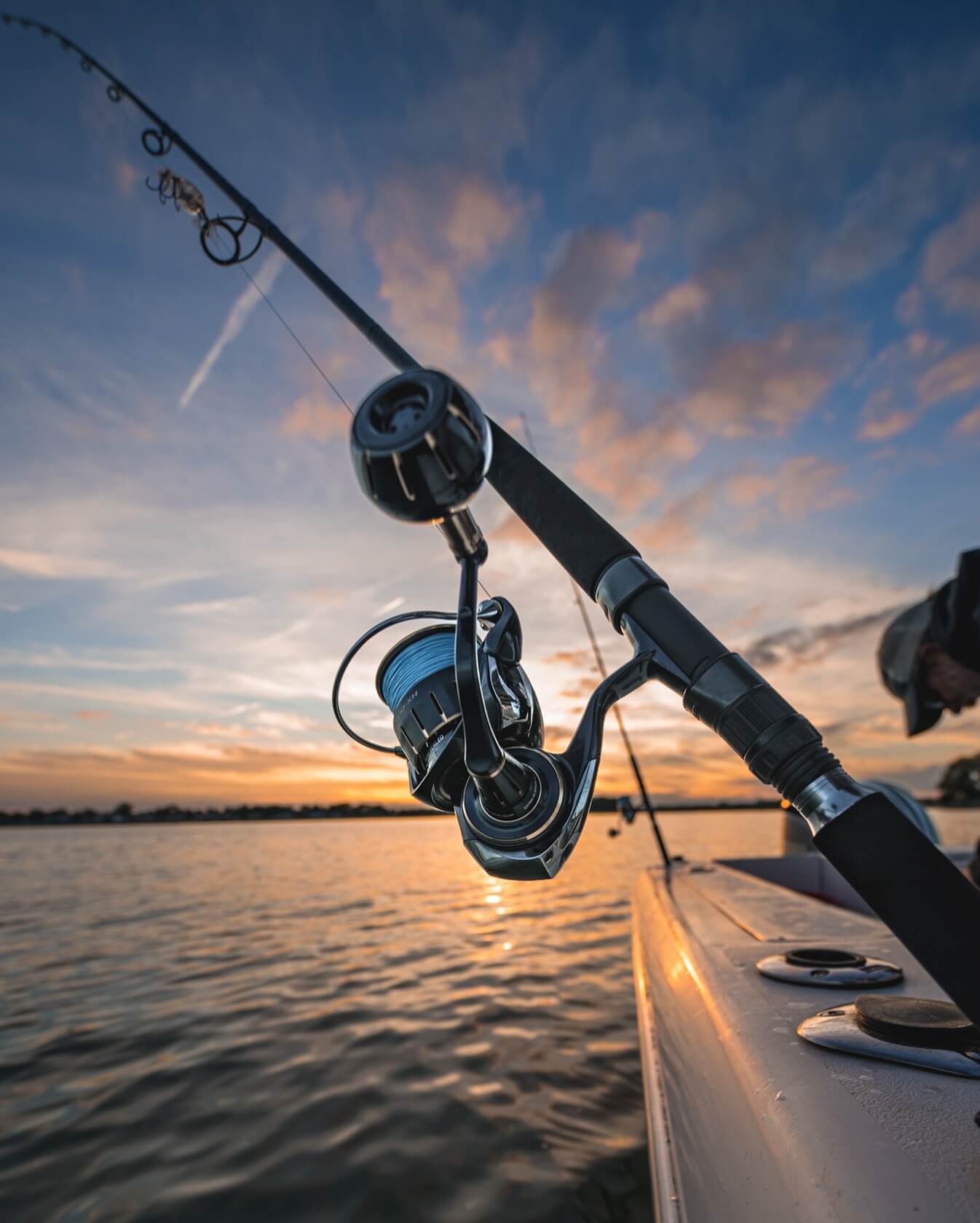
Spinning reels are the most commonly used for Tenya fishing. They are easy to handle and usually have a large line capacity. The French fisherman generally started his fishing apprenticeship with this type of reel. Their braking system is often very effective, easy to adjust, allowing easy control of the fights with powerful predatory fish.
Advantages:
- Easy to use and learn
- Good line capacity
- Efficient braking system
Disadvantages:
- Size and weight sometimes significant
- Need for both hands in all phases of use
Some examples:
- The spinning reel Shimano Stradic, between 3000 and 5000 depending on your use.
- The spinning reel Shimano Spheros SW, perfect for a tight budget.
- The spinning reel Okuma Ceymar HD, an entry-level that has it under the hood.
Baitcasting Reels
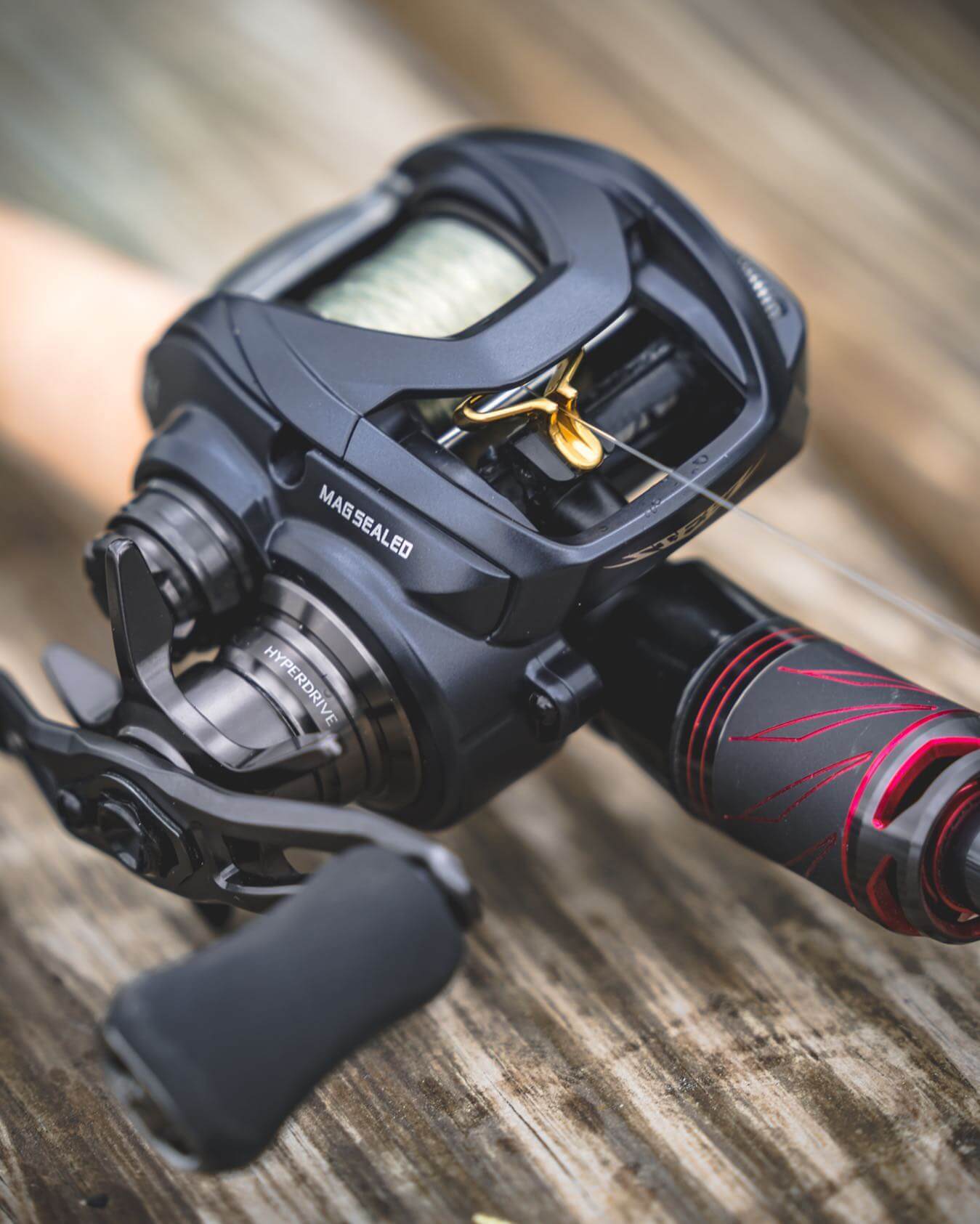
Baitcasting reels, less common, offer a more technical, less known, but can also be very performing.
Their magnetic or centrifugal braking system provides increased precision during casting, which can be useful for reaching specific areas when Tenya fishing.
The principle of the rotating spool offers very interesting braking powers, without causing the existing mechanics to suffer.
Advantages:
- Throwing precision
- Excellent brake control
- Can be used with one hand
Disadvantages:
- More technical handling
- Line capacity generally lower than spinning models
Some examples:
- The casting reel Shimano Tranx 301, a flawless choice.
- The casting reel Daiwa Lexa HD 300 HSL P 2019, a more than complete alternative.
- The casting reel Wombat 71 LJ, an ultra reliable French reel.
The power of the reel
The power of a reel refers to its ability to resist and fight fish. It is mainly related to the reel's braking system as well as the sturdiness of the chassis. For Tenya fishing, a medium power reel is generally sufficient, even if the release of significant weights may require choosing models made of more metal than a light reel.
However, if you are targeting particularly powerful predators, it may be useful to choose a model offering higher power.
The line capacity
To practice Tenya fishing in the best conditions, it is appropriate to have a sufficient line capacity. Indeed, this technique being used at sea, it sometimes requires long-distance throws and with significant depths.
So, make sure to choose a reel that can accommodate a quantity of line suited to your needs. You should not hesitate to make the choice of 250 to 300m of braid to be sure of its capacities.
The ratio and line recovery
The ratio of a reel is the ratio between the number of handle turns made and the length of the line recovered with each turn. For Tenya fishing, a medium ratio (around 5:1) is generally recommended in order to provide a good balance between recovery speed and pulling force when fighting a fish.
It should never be forgotten that the slower the ratio, the more powerful your reel is and will last over time.
The weight and size of the reel
Since Tenya fishing can be practiced for long hours, it is essential to choose a reel that will balance your set well to avoid fatigue. Spinning reels are generally larger than baitcasting models, but light and compact options exist in each category while providing enough resistance for the most dangerous fights.
In summary, To choose the right reel for Tenya fishing, take into account: the type of reel (spinning or baitcasting), the power, the line capacity, the ratio and line recovery, as well as the weight and size of the equipment. By taking these criteria into account, you will be able to fully enjoy your Tenya fishing sessions and catch the beautiful predators that inhabit our seas!
You might like to read: