

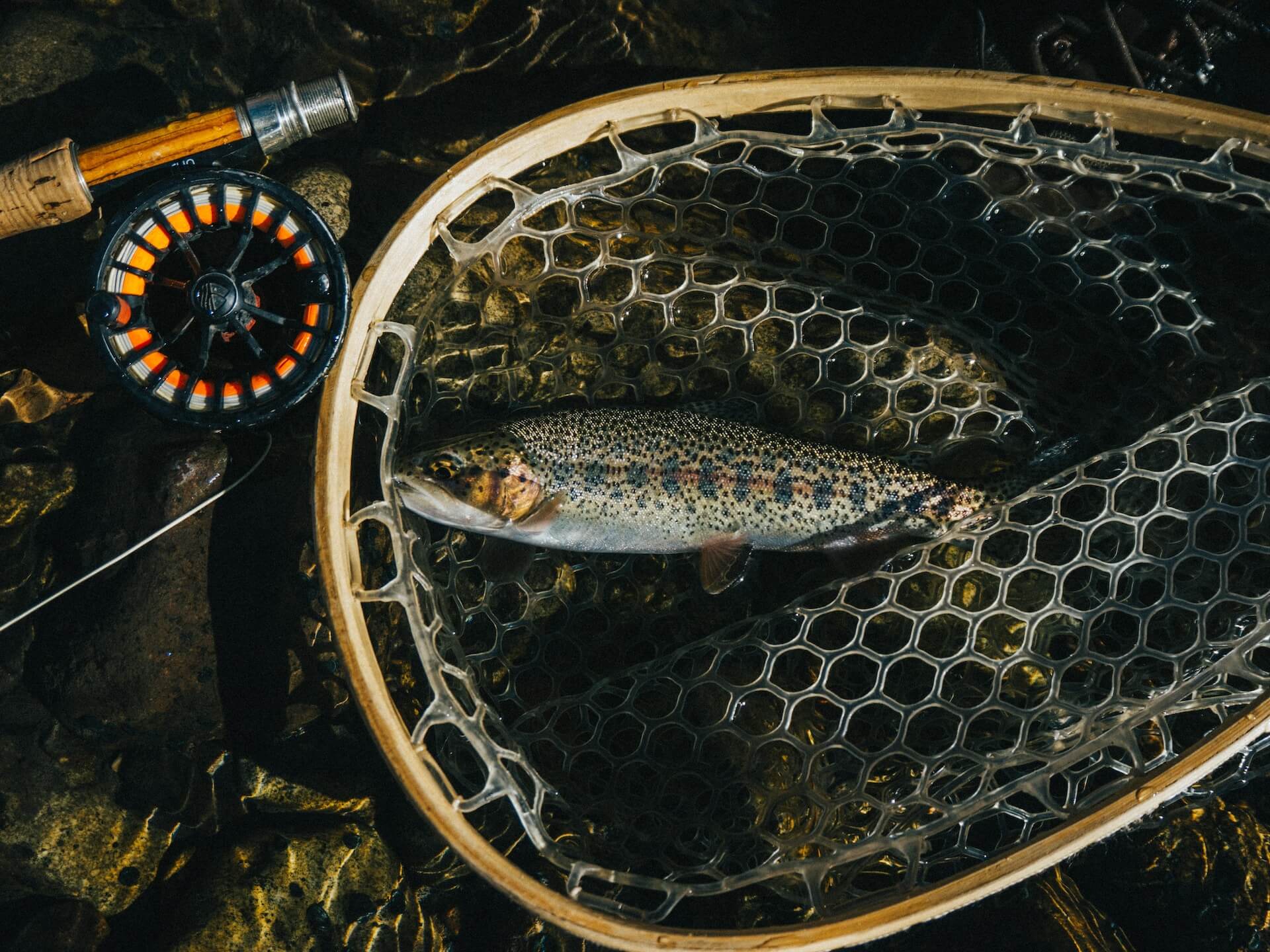
This exciting and technical practice that is fly fishing, allows you to catch different species of fish while enjoying a privileged contact with nature.
Although it makes many people dream, it is one of the least accessible techniques. However, this is not a reason to get discouraged, it is now much easier to get started than a few years ago. Especially thanks to the work of dozens of brands that make up the landscape of fly fishing gear in France and elsewhere.
To get started in this discipline, it is necessary to equip yourself properly in order to guarantee satisfactory results and fast growth. This is exactly what we will see in this article, we will present the basic necessary equipment for beginner's fly fishing.
The ideal rod for beginner fly fishing
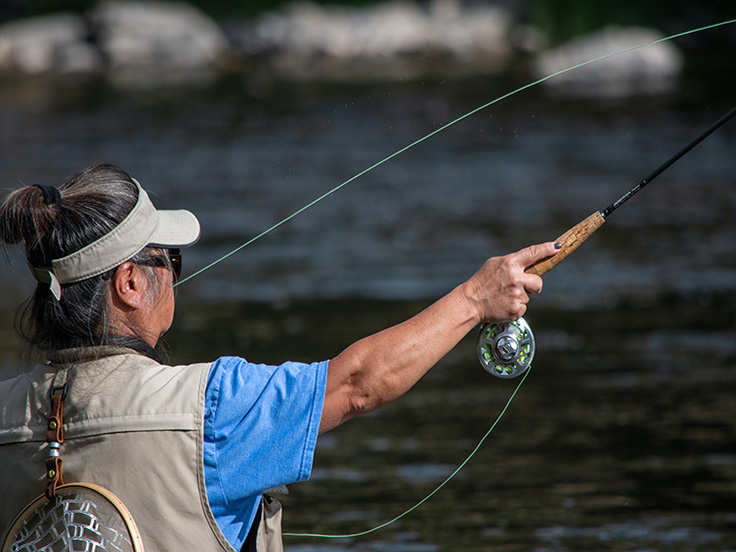
The central element of the fly fisherman's equipment, the rod plays a crucial role in casting and controlling the fish. First of all, it is necessary to understand the different types of fly fishing rods, suitable for the techniques and fishing situations you may encounter:
- Progressive action rods, which bend over their entire length when casting, offer great versatility and good accuracy.
- Tip action rods, which mostly bend at the tip, allow for powerful casts and effective fish control. These rods are appreciated for nymph fishing.
- Parabolic action rods, which bend in a parabolic shape, ideal for novice fishermen thanks to their ease of use and tolerance to mistakes.
The length of the rod will depend on the technique used and the type of environment where you fish. The shortest rods (6 to 8 feet) are suitable for small streams, for dry fly fishing, while longer models (9 to 11 feet) are better suited to wider rivers and lakes, or for nymph fishing.
To start, it is ideal to choose a rod with a line weight of 5. This will be a versatile rod and easy to handle for fishing for trout or chubs.
Our fly rod recommendations for beginners :
- The rod Biocraft XTC from Shimano, ideal for starting with good equipment without spending too much.
- The rod Shimano Biocraft XR, one of the best quality-price ratio on the market, ideal for river and reservoir trout fishing with ultra lightweight nymphs.
- The rod Marryat Tactical LX 4 sections, will seduce energetic fishermen seeking salmonoids in a predatory way. Slightly harder to handle for beginners, it can accompany you throughout your fly fishing life.
Our advice for choosing the reel
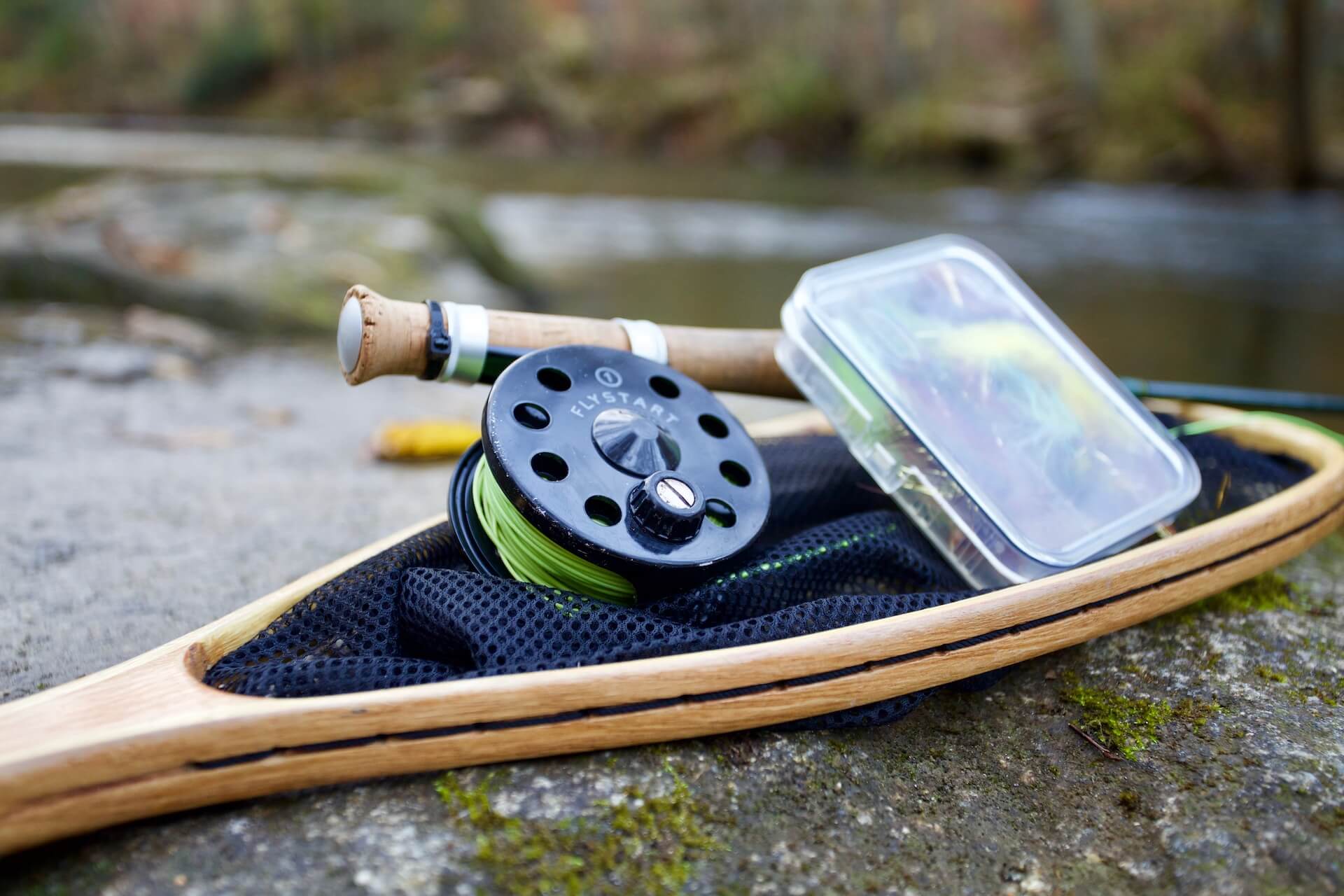
The reel is an essential element to store the line and the thread, as well as to control the tension during the fight with the fish. It should be chosen according to the size of the fishing rod and the type of line used. The main types of reels for fly fishing are :
- The semi-automatic reel, like the Vivarelli, has a trigger that allows the line to be wound without reeling. These are small reels appreciated for river fishing, especially in fast waters or nymph fishing.
- The gear reel, rarer this type of reel has a very important ratio, useful for retrieving line very quickly.
- The interchangable cassette reel, allowing the line to be changed quickly according to the fishing conditions, but with a lesser storage capacity.
- The automatic reel, which reels in the line automatically thanks to a spring mechanism, facilitating manipulation for beginners.
The reel's brake system is also important, as it allows to control the thread tension during the fight with the fish. Braking systems can be friction, ratchet or magnetic, offering different levels of precision and adjustment. You will choose a reel with a strong brake for pike fishing or larger trout specimens.
Our fly reel recommendations for beginners :
- The fly reel Cruise Cassette Fly from Greys, is a reel suitable for beginners. It is robust, reliable and very simple to use. The Cassette Fly is available in 2 sizes for fishing with 5/6 to 7/8 lines.
- The fly Reel JMC Revolution LT, a slightly more expensive alternative that will match demanding beginner anglers and those more experienced, it will then accompany you throughout your progression. It's an excellent reel for trout, bass, chub, but also pike fishing.
The line, the thread and the leaders
The line is the link between the rod and the artificial fly. It allows you to cast and propel the fly to the water surface. The lines can be made from synthetic fibers or natural fibers. The latter require increased maintenance and are not particularly suitable for beginner fishermen. There are several types of lines:
- Floating lines, which stay on the surface and are ideal for dry and light drowned fly fishing.
- Intermediate lines, which sink slowly and are suitable for deep drowned and nymph fishing.
- Sinking lines, which descend rapidly and allow to prospect deeper water layers. They are suitable for fishing with streamers.
The thread, on the other hand, links the line to the leader. It must be strong and discreet so as not to scare the fish. The leader, also known as the tapered leader, consists of a sequence of decreasing diameter threads, to ensure a natural and discreet presentation of the fly.
Artificial flies to choose
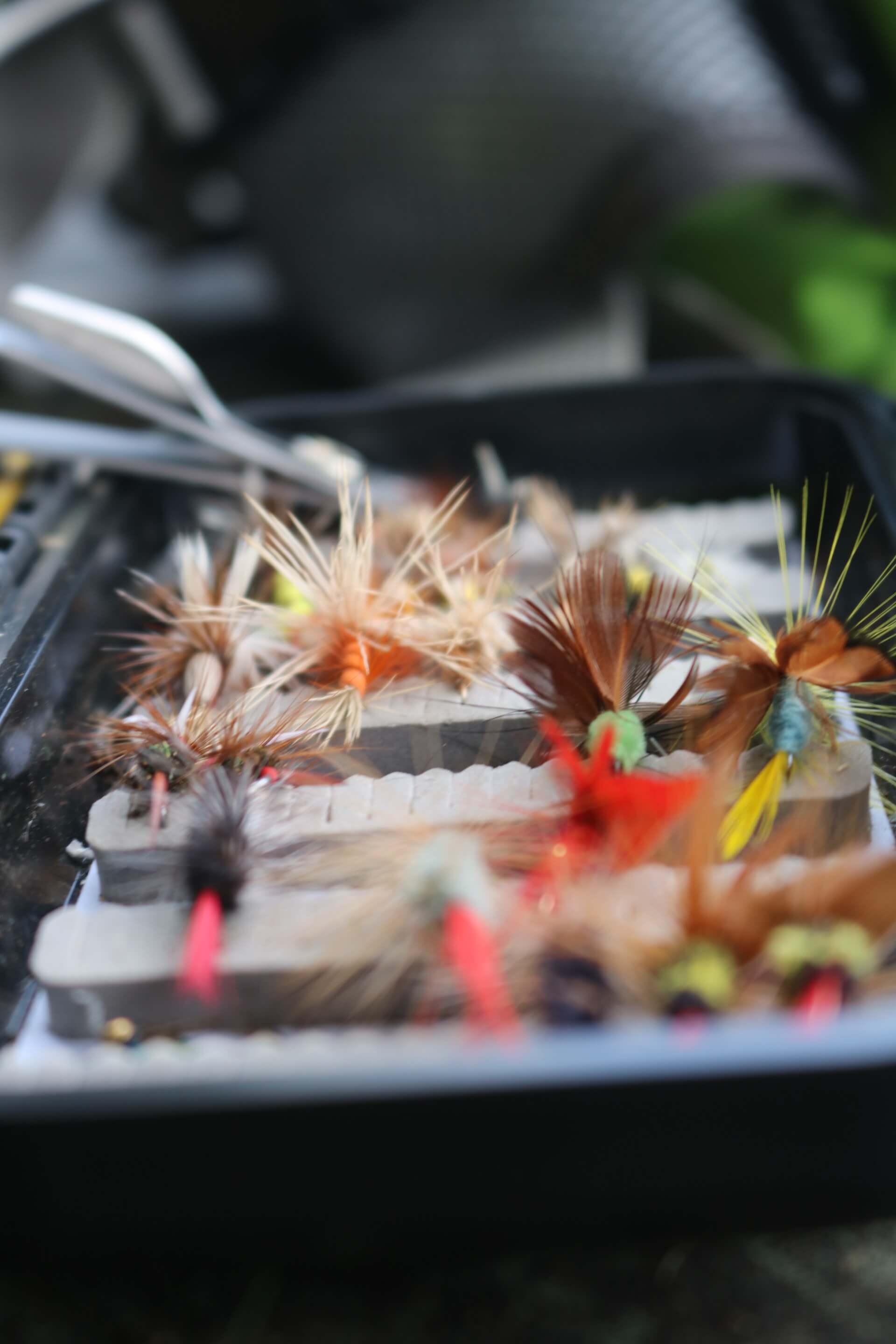
Artificial flies are the lures used for fly fishing. They mimic the insects and other prey of fish, and are classified into several categories:
- Dry flies, which float on the water surface and mimic adult or emerging insects.
- Nymphs, which represent the larval stages of insects and are submerged under water.
- Drowned flies, also submerged, but mimicking insects drowning.
- Streamers, reproducing small fish, worms or crustaceans, and adapted to predators.
Unlike the lures used for predator fishing, flies are mostly made from natural fibers and depend on how close they resemble what is found in nature.
For starters, it is recommended to put together a varied selection of flies, covering different types of lures and the main species of fish found in your fishing area.
Success in fly fishing largely depends on the choice and quality of the equipment used. By carefully selecting your rods, reels, lines, threads and artificial flies, you put all the odds on your side to progress quickly and fully enjoy this exciting discipline.
Indispensable accessories for starting
Waders
Fly fishing is often practiced with feet in the water. It’s an activity close to nature. The water in trout rivers is often very cold which is why wearing waders is essential. A pair of waders is similar to a waterproof overall.
Waders can be made of plastic, neoprene or breathable material. Breathable waders are very comfortable in summer because they let through freshness. In winter, neoprene is essential to stay dry and warm.
Our wader recommendations :
- The SRT Neoprene waders, a warm and thick wader for cold waters, with an excellent quality / price ratio.
- The Breathable Dryzone Stockingfoot waders from the brand DAM, a good compromise for fishing in all weather conditions.
- The Breathable PVC Luxe waders from SRT, ideal for not dying of heat in summer.
Fly boxes
Fly boxes have nothing to do with classic lure boxes. Flies are often very small and very light.
Some are mounted on hooks n°22 to imitate the smallest insects. This is why many fly boxes have a magnetic bottom to prevent flies from flying away in a gust of wind.
The compartments are also much smaller. Other more versatile boxes are equipped with foam to pierce all your flies, nymphs, dries and streamers.
Our fly box recommendations :
- The Tactical Fly FF box from the brand Volkien Soul is a foam-equipped box, ideal for storing all types of flies: streamers, nymphs, wet flies…
- The Tactical Fly F24 box from the brand Volkien Soul is a small compartment box for storing the lightest flies, your hooks and other small accessories.
The landing nets, bags and sunglasses to always have with you
Most often, fly fishing is practiced with feet in the water or on a boat. Therefore, it's important to have suitable baggage to not hinder yourself and to stay free of your movements. The landing net used for fly fishing, also known as a racket, usually has a short handle for easier transport and handling.
When fly fishing, there's no need to carry around large boxes. All flies are kept in small boxes that can be placed in a fishing vest or a small backpack. Another essential accessory for fly fishing is the polarizing sunglasses which help to observe the surface and what is happening underneath without straining your eyes.
Our various accessory recommendations for fly fishing :
- The Manitoba Wooden landing net from the brand DAM, a racket-shaped landing net with a short handle, very handy.
- The Intenze Fly fishing vest from