

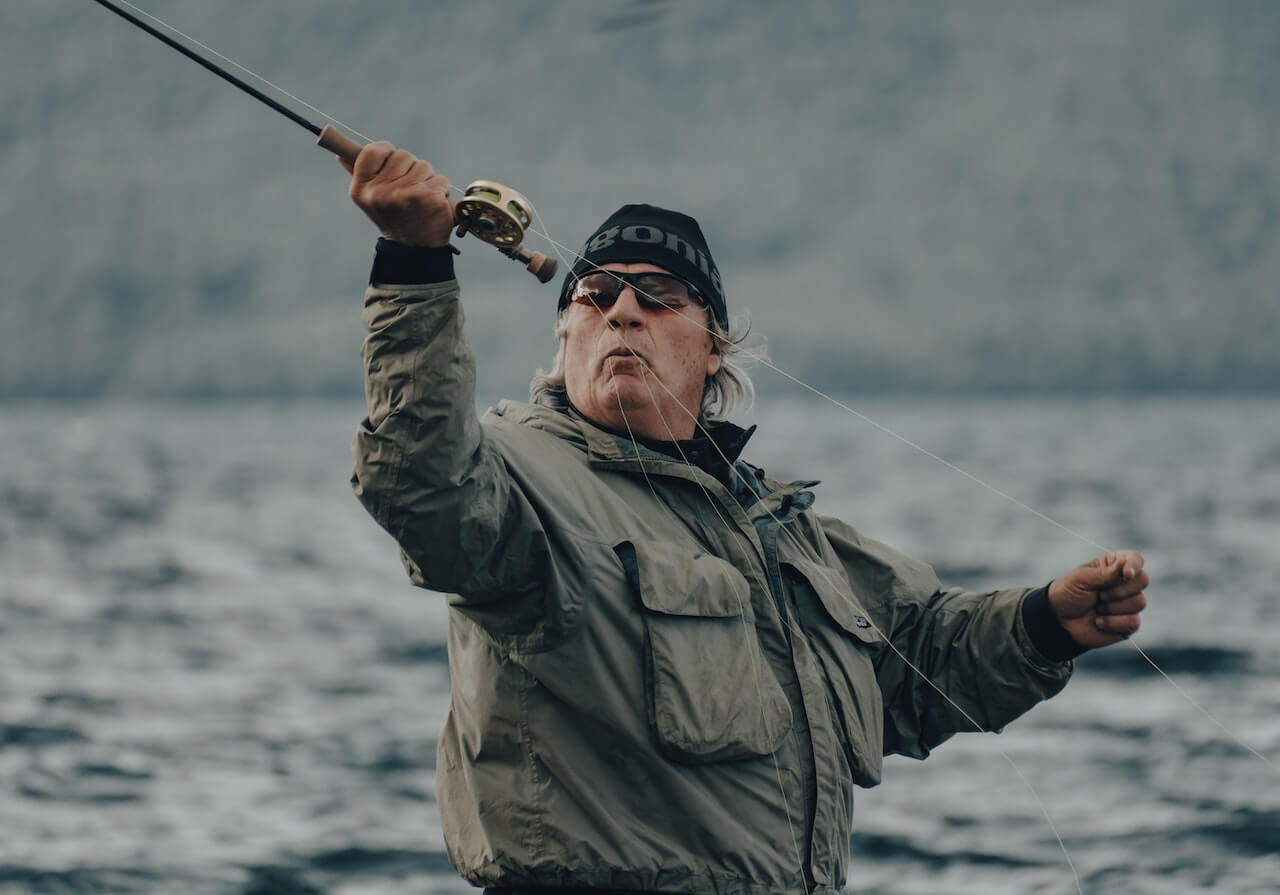
In the exciting world of fly fishing, mastering casting and presentation techniques is essential to optimize your chances of success. In this article, we will introduce you to some of the most effective techniques that you can use to enhance your fishing experience and catch more fish.
Casting Techniques
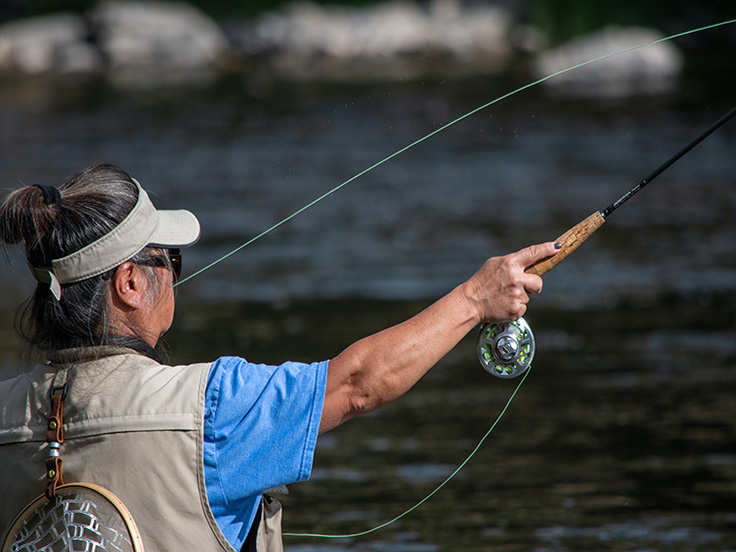
Casting is at the heart of fly fishing, and there are several ways to achieve a precise and fluid cast. Here are some of the most popular casting methods and their uses:
- Back Cast : This is the basic cast in fly fishing. It involves throwing the line back over the shoulder, and then bringing it back quickly forward to drop the fly on the water.
- Roll Cast : This casting technique is used when you do not have space behind you to perform a back cast. The roll cast allows the line to circulate in a loop in front of you before laying it on the water.
- Spey Cast : This particular technique was developed for fishing in large rivers where space is limited and there is often a rapid current. The Spey cast allows you to cover great distances without the need for a back cast.
- The Crossbow Cast: The crossbow cast is a cast that allows you to project the fly under the branches or into difficult to reach areas. To perform this type of cast, hold your rod horizontally in front of you, pull your fly towards you, then release. Thus, the fly is propelled forward by the power of the rod and its elasticity.
- The Double Haul: This casting technique is used for casting far and into the wind with flies and streamers. The double haul allows you to propel the fly further and more accurately, while controlling the speed and direction of the line.
Tips to improve your casting :
- Practice regularly : Like any skill, practice is essential to develop and improve your casting technique. Try to train at least once a week, even if it's just in your backyard or in a park.
- Choose the right equipment : The rod, reel, and line you use all have an impact on the quality of your casting. Make sure to use equipment suited to your skill level and fishing conditions.
- Maintain tension in the line : Constant tension between the fly, the line, and the rod is essential for a precise and effective cast. Try to keep the line tight at all times and avoid loops.
- Use your whole body : Don't rely solely on the strength of your arms to perform a cast. Instead, use the rotation of your body and the bending of your legs to generate power and accuracy.
- Practice with an experienced fisherman : Fly fishing is a physical activity. It is important to acquire the right movements to make beautiful casts and avoid hurt your shoulder or wrist.
Presentation Techniques
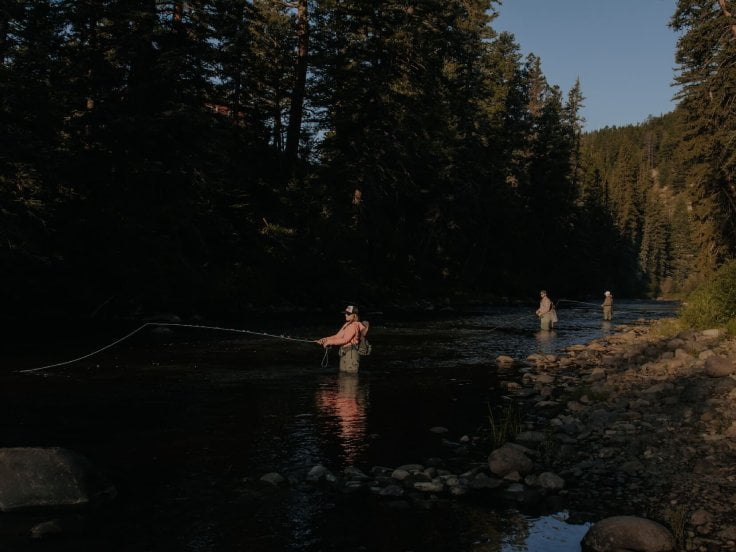
Once you have mastered the art of casting, it's time to focus on presenting the fly on the water surface. Here are some techniques that will help you make your fly more attractive to the fish:
- Dead drift : This technique is used to present the fly so it appears to be a lifeless insect floating on the water. To achieve this, simply allow the fly to drift with the current while avoiding any tension in the line.
- The strip : The strip technique is used to animate the fly under the water, imitating the movement of a fish or a swimming insect. To perform a strip, slowly and steadily pull on the line with your free hand while recovering the excess line with your reel.
- The twitch : The twitch is another method of animating the fly, but instead of pulling on the line, it involves giving quick little jerks with the rod to move the fly erratically.
Tips to improve your presentations:
- Observe nature : Take the time to study the movements of the insects and fish you are trying to imitate, and try to reproduce these movements as accurately as possible with your fly.
- Adapt to conditions : Fishing conditions can vary significantly from day to day, or even from hour to hour. Be prepared to adjust your presentation technique according to the conditions, including the speed of the current and the clarity of the water.
- Be discreet : Fish are often wary and can be scared off by the presence of a fisherman. Try to approach fishing areas discreetly and minimize any sudden movements or noises you make.
- Practice on grass : Use a hoop to practice casting inside it while properly placing your silk.
In summary, mastering casting and presentation techniques is essential for success in the art of fly fishing. Take the time to learn and practice these skills, and you'll see your results improve over time. Remember, each fishing outing is an opportunity to learn and progress, so don't hesitate to experiment and adapt your methods according to the conditions and situations you encounter.
Our other articles to improve your fly fishing skills :